
Table of Contents
- Direct Answer
- What Does Proverbs 13:11 Mean?
- Why This Still Matters
- How Proverbs 13:11 Applies to Real Financial Decisions
- Why Modern Culture Rejects Proverbs 13:11
- Common Mistakes Christians Make About Wealth
- Related Biblical Principles That Reinforce This
- A Practical Next Step
- Final Thoughts
- About the Author
- FAQs
Direct Answer
Proverbs 13:11 teaches that wealth built slowly through diligence, discipline, and consistent effort is more stable than wealth gained quickly. The verse warns against chasing shortcuts, impulsive gains, and financial strategies that cannot hold. Biblical wealth building is gradual, disciplined, and rooted in stewardship, not urgency.
What Does Proverbs 13:11 Mean?
Proverbs 13:11 says:
"Wealth gained hastily will dwindle, but whoever gathers little by little will increase it."
The verse sets up a direct contrast between two financial paths.
The first is wealth gained hastily. This is the pursuit of quick financial gain without patience, wisdom, or self-control. Scripture is not subtle about where this leads. Impulsiveness and greed are not neutral tendencies; they are destructive ones.
The second path is wealth gathered little by little. This is steady, deliberate progress built on wise stewardship, consistent habits, and the willingness to play a long game when everyone around you is looking for a shortcut.
The core principle is straightforward, even if it is uncomfortable to accept: biblical wealth building is usually slow. Scripture does not condemn prosperity. It condemns foolishness, dishonesty, and the obsession with getting there fast.
Why This Still Matters
Most financial problems do not start with a single catastrophic decision. They start with unrealistic expectations.
People want immediate results. They want overnight success, rapid investment returns, and lifestyle upgrades that outpace their actual financial foundation. That gap between what people want and what sound financial behavior actually produces is where the damage happens.
Proverbs pushes back against that mentality consistently. Lasting financial stability is built through repeated wise decisions made over long stretches of time. The disciplines are unglamorous on their own: saving consistently, avoiding unnecessary debt, living below your means, developing marketable skills, managing what you already have responsibly. None of these feel significant in the moment. Compounded over years, they are transformative.
That is precisely why most people ignore them. Consistency is hard to sell. But Proverbs does not offer an alternative. It emphasizes consistency over intensity, again and again.
How Proverbs 13:11 Applies to Real Financial Decisions
This is not an abstract theological principle. It has direct implications across nearly every financial decision a person makes.
Spending
Impulsive purchases rarely feel significant individually. Repeated over months and years, they quietly erode financial stability in ways that large one-time expenses often do not.
Saving
Waiting for "extra money" before you start saving is a strategy that never works. Consistent saving, even in small amounts, builds the financial resilience that occasional windfalls cannot.
Career and Income Growth
Skill development and disciplined effort create durable income opportunities. Chasing trends and shortcuts typically produces short bursts followed by instability.
Debt Management
Quick financial decisions carry long consequences. Proverbs consistently calls for wisdom and restraint before commitment, not after.
Investing
Impatience is expensive. Many people lose money not because their investments were bad but because they lacked the discipline to stay the course. Gradual increase, not reckless speculation, is the biblical model.
Why Modern Culture Rejects Proverbs 13:11
The world most people live in today is not designed to reward patience.
Social media runs on highlight reels: rapid success stories, luxury lifestyles, and financial wins that appear to happen overnight. Whether it is a viral business launch, an investment that "10x'd," or someone living well beyond what their visible income should allow, the message is constant and clear. Fast is better. More is now. Waiting is for people without options.
That environment does not just distract people from sound financial principles. It actively works against them. When patience and stewardship are invisible and extravagance is on display everywhere you look, discipline starts to feel like a disadvantage rather than a strategy.
The result is predictable. People make impulsive financial decisions, carry unnecessary debt, and chase results that their current habits cannot support. When the wealth they expected does not materialize on schedule, the response is often frustration rather than honest self-assessment.
Proverbs 13:11 offers a direct counter to that pattern. Not a trendy reframe, and not a motivational adjustment. A foundational shift in how wealth is understood. Gradual growth, consistent discipline, and faithful stewardship are not outdated ideas that modern tools have replaced. They are still the mechanism. The noise has just made them harder to choose.
Common Mistakes Christians Make About Wealth
1. Believing Wealth Is Automatically Evil
Scripture warns against the love of money, not against money itself. Responsible stewardship and financial increase are not contradictions of faith.
2. Chasing Quick Wealth
It is possible to read Proverbs 13:11, agree with it intellectually, and then immediately pursue the exact behavior it warns against. Emotional financial decisions and unrealistic opportunities are easy to rationalize in the moment.
3. Underestimating the Role of Discipline
Motivation fades. Financial stability is built on systems, habits, and choices that do not depend on how you feel on a given day.
4. Separating Stewardship From Faith
Money management is not a secular concern that sits outside your spiritual life. Proverbs treats faithful stewardship as practical obedience. The two have never been separate.
Related Biblical Principles That Reinforce This
Proverbs 13:11 is not an isolated verse. Several passages confirm the same pattern:
- Proverbs 21:5 connects diligent planning with abundance and warns that haste leads to poverty.
- Proverbs 10:4 links consistent effort with financial increase.
- Proverbs 22:7 addresses the real cost of debt and financial bondage.
- Proverbs 27:23 calls for active awareness and responsibility over what has been entrusted to you.
Taken together, these verses form a clear and consistent framework: biblical wealth is built through wisdom, stewardship, diligence, and long-term discipline. That pattern does not change across contexts or centuries.
A Practical Next Step
Identify one area where you are currently prioritizing short-term satisfaction over long-term stability.
This week, do three things:
- Reduce one impulsive spending behavior, even slightly.
- Strengthen one consistent financial habit you already have.
- Measure progress by direction, not speed.
Knowledge alone will not produce change. Application is what separates someone who understands biblical money principles from someone who actually lives them. Small, disciplined actions repeated consistently are what create real results over time.
👉 Explore the 31-Day Proverbs Wealth System
Final Thoughts
Proverbs 13:11 is a direct challenge to the modern obsession with speed and instant results. Biblical financial wisdom does not promise a fast path. It promises a reliable one. Stewardship, discipline, and consistent wise decisions, practiced repeatedly over time, produce the kind of financial stability that shortcuts never do. Understanding the principle is the starting point. Applying it is where real transformation begins.
About the Author
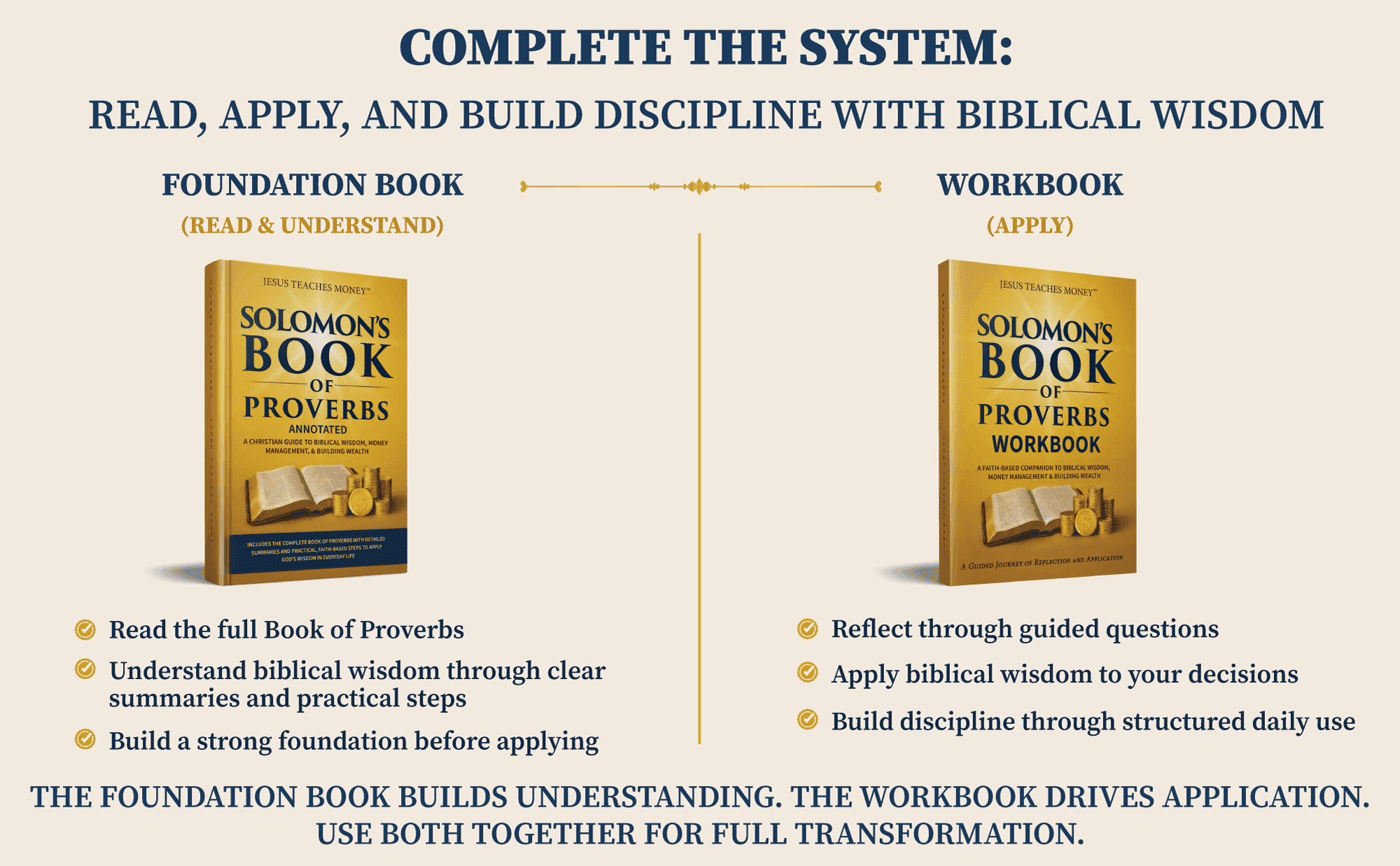
Abraham Duncan is the author of Solomon's Book of Proverbs (Annotated) and the creator of the Jesus Teaches Money™ framework, a structured system designed to help Christians apply biblical wisdom to daily life, stewardship, and financial decision-making.
FAQs
What does Proverbs 13:11 mean?
It teaches that wealth gained too quickly tends to disappear, while wealth built gradually through discipline and wise stewardship tends to last.
How does this apply to everyday financial decisions?
It encourages consistent saving, disciplined spending, patient wealth building, and long-term thinking over the pursuit of shortcuts.
What is the first action I should take?
Identify one area where you are choosing short-term ease over long-term stability, and make one concrete change this week. Sustained progress starts with a single honest decision.