
Table of Contents
Direct Answer
So what does the Bible say about debt? Scripture does not call debt a sin, but the biblical truth about debt is consistent throughout: debt is a burden and a form of bondage to avoid wherever possible. The clearest statement is Proverbs 22:7, which puts you in a position of servitude to the lender the moment you borrow. Scripture does not forbid borrowing outright, but it warns plainly that debt transfers control of your future to someone else, and it calls believers toward diligence, planning, and repayment instead.
What Does Proverbs 22:7 Mean?
Proverbs states the principle directly:
"The rich rule over the poor, and the borrower is slave to the lender." (Proverbs 22:7, Berean Standard Bible)
The word translated "slave" is not poetic exaggeration. It describes a real shift in who holds power. When you borrow, part of your future income is no longer yours to direct. It is already committed to someone else before you earn it. The lender now has a claim on your time, your labor, and your choices until the debt is cleared.
This is not a condemnation of the borrower as a bad person. Proverbs is describing how debt functions, not assigning moral guilt. The point is sobering rather than shaming: debt quietly narrows your freedom. Every obligation you take on reduces the number of decisions you can make freely later, because those future dollars are already spoken for.
Read this way, the verse is less a rule and more a warning label. It tells you exactly what you are trading when you borrow, so that you can count the cost before you sign.
Why Debt Is a Practical Problem for Most People
Most people do not end up in serious debt through one reckless decision. They arrive there gradually, through a series of small choices that each felt reasonable at the time. A purchase financed here, a balance carried there, a payment minimum met but never exceeded. None of it feels like bondage in the moment. It feels normal, because it is normal in the culture around us.
That is the trap. Debt rarely announces itself as a problem until the weight is already heavy. By then the monthly obligations have quietly taken over the budget, and the freedom to give generously, save consistently, or respond to an unexpected need has shrunk without anyone deciding it should.
The deeper issue is usually behavioral, not mathematical. People understand that debt is expensive. They know the interest works against them. Yet they continue borrowing because the underlying patterns, impulsive spending, comparison with others, and the habit of reaching for immediate satisfaction, were never addressed. The debt is the symptom. The decision-making is the cause. This is exactly why knowing the numbers rarely changes anything on its own.
How the Bible's Teaching on Debt Applies to Your Money
If debt is a form of servitude, then reducing debt is a movement back toward freedom, and Scripture gives a consistent framework for getting there.
The first principle is repayment as a matter of integrity. The righteous, Scripture says, repay what they owe. Honoring your obligations is not merely financial hygiene; it is a reflection of character. Walking away from a debt you agreed to is treated as the behavior of the unwise, not the shrewd.
The second principle is caution before commitment. Proverbs repeatedly warns against putting up security for debts you cannot cover, and against co-signing obligations on behalf of others. The wisdom is to avoid placing yourself in a position where someone else's decisions can take what little you have. Before borrowing, the biblical question is not only "can I make the payment" but "what am I surrendering if circumstances change."
The third principle is the alternative Proverbs offers in place of borrowing: patient, diligent accumulation. Wealth built gradually through consistent work is treated as stable, while wealth grabbed quickly tends to dwindle. Applied to debt, this means the biblical path out is rarely a shortcut. It is consistent, disciplined repayment combined with the slow building of margin so that future needs do not require new borrowing.
None of this requires a finance degree. It requires the willingness to apply a few clear principles consistently, which is the whole point of treating Proverbs as a practical guide rather than inspirational reading.
A Practical Next Step
If debt is a pressure point in your life right now, you do not need a complicated system to begin. You need one honest action this week.
- List every debt you currently owe, in one place, with the balance and the interest rate beside each one. Most people avoid this step because seeing it all together is uncomfortable. Do it anyway. Clarity is the precondition for change.
- Identify the single debt creating the most pressure, whether by interest rate or by emotional weight.
- Make one concrete decision today that moves that debt down, even slightly: an extra payment, a canceled subscription redirected toward it, or a spending pause in one category.
One deliberate action, repeated and built upon, does more over time than a perfect plan you never start.
Common Mistakes People Make With Debt
Treating Debt as Normal Rather Than as a Burden
Because borrowing is culturally routine, many people never stop to recognize what Proverbs 22:7 describes. Naming debt accurately, as a weight on your freedom, is the first step toward refusing to accept more of it casually.
Addressing the Math Without Addressing the Behavior
Refinancing, consolidating, and budgeting are useful tools, but they do not fix the spending patterns that created the debt. Without a change in behavior, the balance tends to return.
Borrowing to Keep Up Appearances
A significant share of consumer debt is driven by comparison and the desire to match a lifestyle. Proverbs warns repeatedly against envy and pride, because they quietly drive financial decisions that wisdom would reject.
Ignoring Small Recurring Obligations
Minor balances and ongoing payment commitments feel harmless individually. Together they consume the margin that would otherwise fund saving and giving. Small leaks sink budgets.
Related Biblical Principles
Several other passages deepen what Scripture teaches about money and debt. Proverbs 21:20 commends the wise for storing up resources rather than consuming everything they have, which is the saving habit that prevents future borrowing. Proverbs 22:26-27 cautions against pledging security for debts you cannot cover. The broader theme of building wealth gradually rather than chasing it runs consistently through Proverbs and connects directly to how debt is treated throughout the book. Together these passages form a consistent framework rather than a collection of isolated verses, and applying them daily is where lasting financial change actually begins.
Apply Biblical Wisdom Consistently
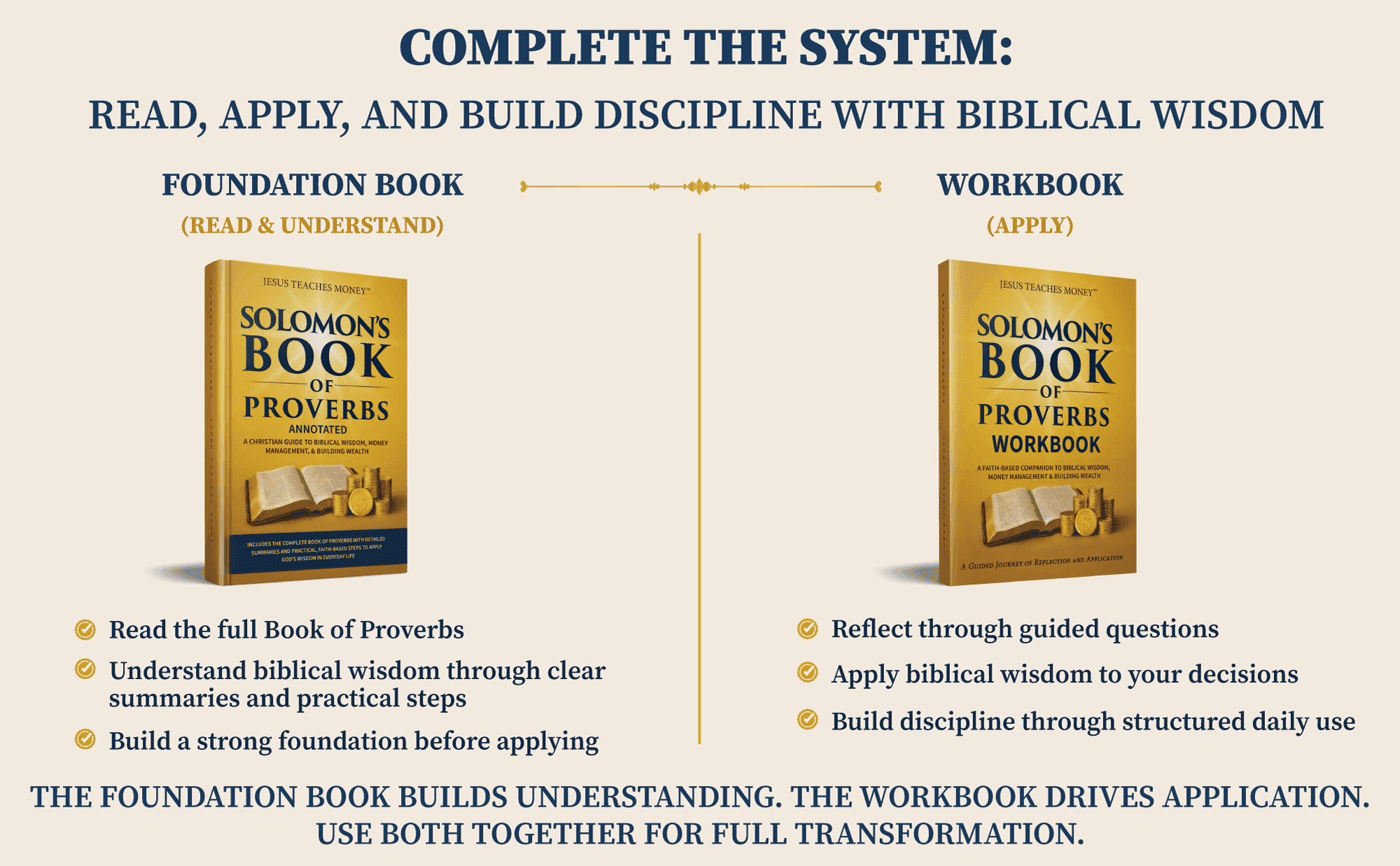
Understanding what the Bible says about debt is the starting point. Turning that understanding into freedom requires consistent, daily application, which is exactly what a structured system provides. Reading one chapter of Proverbs a day, identifying one principle, and applying one action builds the discipline that keeps you out of debt long after the initial motivation fades.
👉 Explore the 31-Day Proverbs Wealth System
Final Thoughts
The Bible's teaching on debt is honest rather than harsh. It does not shame you for borrowing, but it refuses to pretend debt is free. It names the trade clearly, points toward repayment and diligence, and offers patient accumulation as the better path. Wisdom on this subject only changes your life when it becomes practice. Knowing that the borrower is slave to the lender means little until it reshapes the next decision you make about money.
About the Author
Abraham Duncan is the author of Solomon's Book of Proverbs (Annotated) and the creator of the Jesus Teaches Money™ framework, a structured system designed to help Christians apply biblical wisdom to daily life, stewardship, and financial decision-making.
Jesus Teaches Money™: 31-Day Proverbs Wealth System (Book & Workbook Digital Bundle)
$39.97
Apply Biblical Wisdom in Your Daily Life in 31 Days A structured Proverbs-based system designed to move you from reading Scripture to disciplined, consistent application in your daily decisions, strengthening your stewardship and improving your financial direction. Includes an annotated… read more

FAQs
Is debt a sin according to the Bible?
No. The biblical truth about debt is that Scripture does not call it a sin, but it consistently treats debt as a burden to avoid where possible. Proverbs 22:7 describes the borrower as slave to the lender, and Scripture emphasizes repaying what you owe. Debt is warned against, not forbidden outright.
What does Proverbs 22:7 mean about debt?
The Proverbs 22:7 meaning is that borrowing shifts power to the lender. When you owe money, part of your future income is already committed to someone else, which limits your freedom to give, save, and decide. The verse is a warning about what debt costs you, not a condemnation of the borrower.
How do I start getting out of debt biblically?
Getting out of debt biblically starts with listing every debt, its balance, and its interest rate in one place. Identify the debt creating the most pressure, then take one concrete action this week to reduce it. Scripture favors consistent, diligent repayment over shortcuts, so progress comes from repeated small decisions applied over time.
Does the Bible say it is wrong to borrow money?
Not directly. What the Bible says about borrowing is cautionary rather than prohibitive. Scripture warns against pledging security you cannot cover and urges diligent repayment. The wiser path it offers is patient saving and gradual building, so that future needs do not require new debt.