
Table of Contents
- Direct Answer
- What Does the Bible Say About Giving? The Core Principle
- What Does the Bible Say About Giving to Others?
- Why Most People Struggle to Give Generously
- The Danger of Withholding What You Should Give
- Bible Verses About Giving That Define the Standard
- A Practical Next Step
- Common Mistakes Christians Make About Giving
- Related Biblical Principles
- Apply Biblical Wisdom Consistently
- Final Thoughts
- About the Author
- FAQs
Direct Answer
What does the Bible say about giving? Scripture presents giving not as an optional act of charity but as a core expression of faith, trust, and stewardship. From the first-fruits principle in Proverbs to Paul's instruction in 2 Corinthians, the biblical standard is consistent: give cheerfully, give generously, and give from what comes first rather than from what remains. Giving in the Bible is less about the amount and more about the condition of the heart behind it.
What Does the Bible Say About Giving? The Core Principle
The most direct New Testament statement on giving comes from Paul:
"Each of you should give what you have decided in your heart to give, not reluctantly or under compulsion, for God loves a cheerful giver." (2 Corinthians 9:7, Berean Standard Bible)
Three words carry the weight of this verse: decided, reluctantly, and cheerful. The decision is made in advance, not in the moment. The reluctance Paul warns against is not merely the feeling of hesitation but the posture of someone giving because they feel they have to rather than because they want to. And the cheerfulness God loves is not forced positivity. It is the genuine freedom of someone who has genuinely surrendered financial control and gives from that place.
This is the New Testament frame for biblical giving. It is not a transaction, not a duty performed under obligation, and not a formula for receiving more in return. It is an expression of a heart that holds money loosely because it trusts the one who provides it.
The Old Testament establishes the same principle through the first-fruits pattern. Proverbs 3:9 instructs believers to honor God with their wealth and with the firstfruits of all their crops. The word firstfruits is not incidental. It means giving from the first portion of what you have, before other needs and expenses are addressed, as a deliberate act that orders your financial priorities around the recognition that everything you have came from God.
What Does the Bible Say About Giving to Others?
Giving in the Bible extends beyond the tithe and the local church. Scripture places consistent emphasis on giving to those in need as an expression of the same faith that drives all generosity.
Proverbs 19:17 states that whoever is kind to the poor lends to the Lord, and he will reward them for what they have done. The framing is deliberate: generosity toward others is not charity in the secular sense. It is a loan to God himself, which reframes the entire transaction. You are not giving away what is yours. You are entrusting resources to the one who owns everything, directed toward the people he cares about.
Proverbs 11:24-25 develops this further, teaching that one person gives freely and gains even more, while another withholds what is due and comes to poverty. This is not a prosperity formula. It is a description of the spiritual and practical dynamic that generous living produces over time. The person who gives freely develops a loosened grip on money, a growing trust in God's provision, and a pattern of stewardship that tends to produce more margin, not less.
What the Bible says about giving to others is that it is not a separate category from your giving to the church or to God. It is all part of the same posture: a life ordered around the recognition that your resources are held in trust, not owned outright.
Why Most People Struggle to Give Generously
The most honest reason people do not give generously is fear. Not theological disagreement, not lack of opportunity, not insufficient income. Fear that there will not be enough, that giving now means going without later, that generosity is a risk they cannot afford.
That fear is not addressed by more income. It is a condition of the heart that persists regardless of what someone earns. A person who does not trust God with one hundred dollars will not suddenly trust him with one thousand. The grip on money and the anxiety around releasing it follow the heart, not the bank balance.
A second struggle is sequential thinking about money. Most people give from what is left after all other spending is done. When the mortgage, the groceries, the subscriptions, and the discretionary spending are finished, whatever remains is what gets given. That sequence guarantees that giving will always be crowded out, because expenses expand to fill available income and whatever is left is rarely substantial or consistent.
The third struggle is that giving feels disconnected from financial stability. People separate their faith life from their money decisions and treat generosity as a spiritual practice that operates outside of practical financial reality. Scripture does not recognize that separation. Proverbs consistently connects how you handle money with the condition of your heart, and the New Testament connects generous living with the kind of trust that actually produces financial stability over time.
The Danger of Withholding What You Should Give
An ungenerous pattern does not hold its position. It compounds in the wrong direction.
When giving is consistently deferred, delayed, or reduced, the grip on money tightens rather than loosens. Decisions about money become increasingly self-protective. The margin that would have gone to others gets absorbed by lifestyle. Generosity, which Scripture describes as a discipline that builds trust and loosens the hold money has on you, never gets developed because it never gets practiced.
There is also a practical consequence that Proverbs names directly. Proverbs 11:24 says the one who withholds what is due comes to poverty. This is not a curse. It is a description of what an ungenerous, self-protective financial posture tends to produce: a life ordered around accumulation and self-sufficiency that gradually closes off the generosity, community, and trust that sustainable financial health actually requires.
Bible Verses About Giving That Define the Standard
Several passages establish the full biblical picture of what giving looks like in practice.
Proverbs 3:9-10 establishes the first-fruits principle: honor God with your wealth and the firstfruits of all your crops, and your barns will be filled to overflowing. Luke 6:38 records Jesus stating that a good measure, pressed down, shaken together, and running over will be poured into your lap, because with the measure you use, it will be measured to you. Malachi 3:10, which speaks directly to the tithe, extends the same principle: bring the whole tithe and test God in this, inviting believers to give and observe what follows.
Taken together, these Bible verses about giving establish a consistent pattern: structured, generous, first-fruits giving is presented throughout Scripture as the financial posture that produces the most freedom, not the least.
A Practical Next Step
If your giving is inconsistent, infrequent, or always from the remainder rather than the first portion, one structural change does more than any amount of intention.
- Decide in advance what percentage you will give and where it will go. The decision made ahead of time is what Paul describes in 2 Corinthians 9:7. A decision made in the moment of spending pressure is not the same thing.
- Automate it where possible. When giving requires a monthly decision, the monthly spending pressure will frequently win. Remove the decision by making giving automatic.
- Start with a specific, realistic amount this pay period. Not next month, not when finances improve. Generosity that waits for comfort waits indefinitely.
Common Mistakes Christians Make About Giving
Treating Giving as What Happens With the Remainder
When giving comes last in the budget sequence, it will always be inconsistent. The first-fruits principle is not a metaphor. The order matters because it reorders every other financial decision that follows it.
Separating Giving to the Church From Giving to People in Need
Scripture treats both as expressions of the same generosity. Compartmentalizing them, giving to the church but not to people, or giving to people but not to the church, misses the unified picture of biblical generosity.
Giving Based on Emotion Rather Than Decision
Responding to an urgent need or a compelling moment is valuable. But emotional giving is not the same as the structured, decided generosity Scripture describes. One responds to circumstances; the other reflects a formed discipline.
Waiting for a More Comfortable Financial Season
There is no income level at which giving becomes easy if the discipline was never built at lower levels. Generosity is a practice that develops trust; it does not follow from trust already established. The practice is what builds the trust.
Related Biblical Principles
Several passages expand what the Bible teaches about giving within the broader framework of stewardship. The connection between giving and what the Bible says about tithing is direct: tithing is the structured baseline from which broader generosity grows. Proverbs 21:26 observes that the righteous give without sparing, connecting generosity to the character formation that Proverbs consistently ties to financial wisdom. And the full framework for applying biblical giving as a daily discipline is what the step-by-step system for applying biblical wisdom to your life and finances is built around.
Apply Biblical Wisdom Consistently
Knowing what the Bible says about giving is the beginning; building the daily discipline to give generously, consistently, and first is where lasting transformation actually happens.
👉 Explore the 31-Day Proverbs Wealth System
Final Thoughts
What does the Bible say about giving? It says give cheerfully, give generously, give from the first portion rather than the last, and give to both the church and to those in need as expressions of the same trust. Giving in the Bible is not a financial strategy and it is not a transaction. It is the natural behavior of someone who has genuinely surrendered financial control to God and holds their resources loosely as a result. The discipline of giving does not follow from having enough. It produces the kind of trust that makes enough feel like exactly what it is.
About the Author
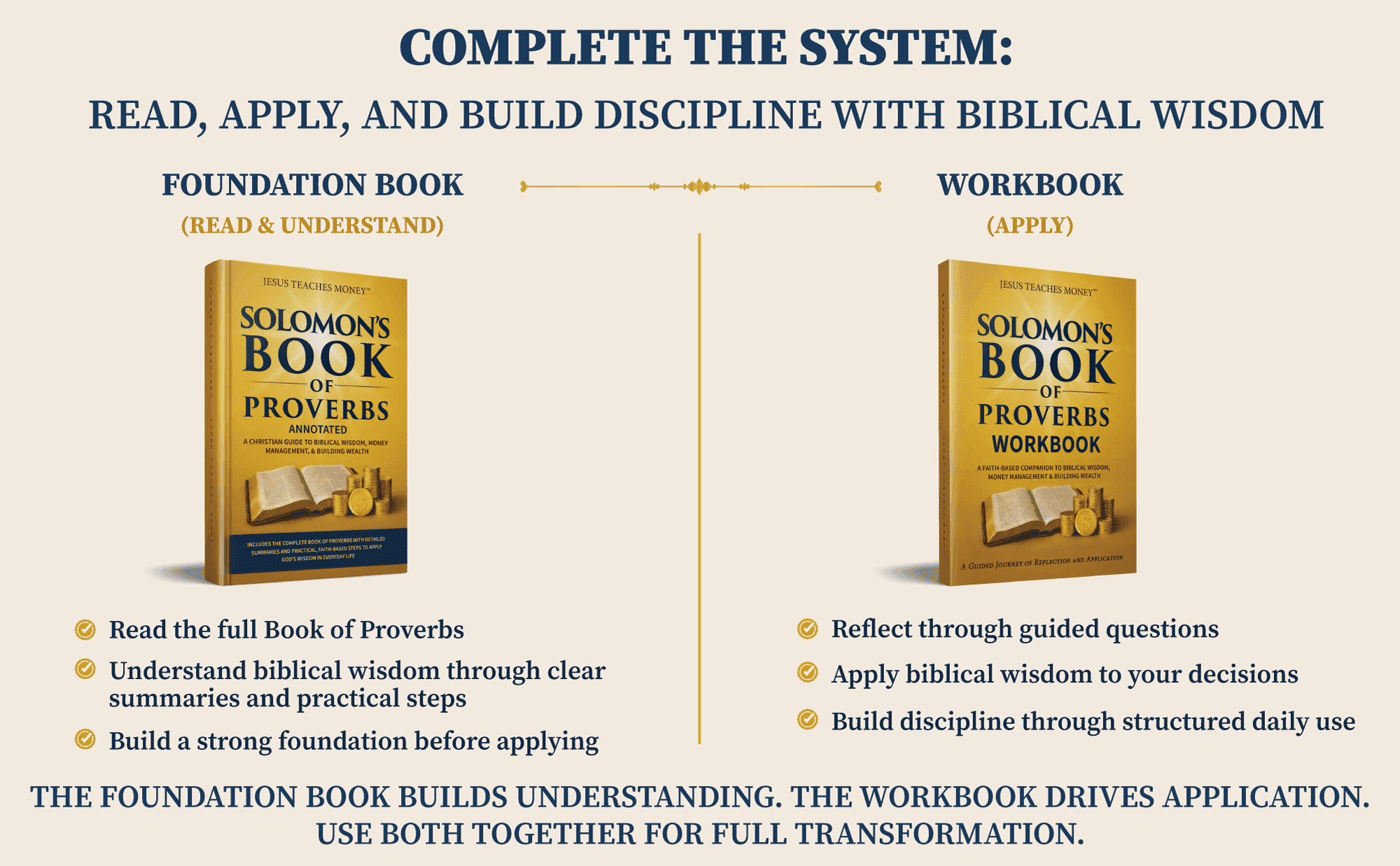
Abraham Duncan is the author of Solomon's Book of Proverbs (Annotated) and the creator of the Jesus Teaches Money™ framework, a structured system designed to help Christians apply biblical wisdom to daily life, stewardship, and financial decision-making.
FAQs
What does the Bible say about giving?
Scripture presents giving as a core expression of faith and stewardship, not optional charity. Paul instructs believers in 2 Corinthians 9:7 to give what they have decided in their heart, not reluctantly or under compulsion, because God loves a cheerful giver. Proverbs establishes the first-fruits principle: give from the first portion of what you have, before other expenses are addressed.
What does the Bible say about giving to others?
Proverbs 19:17 states that generosity toward those in need is a loan to God himself. Proverbs 11:24-25 teaches that one who gives freely gains even more, while one who withholds comes to poverty. Giving to others is not a separate category from giving to God; it is part of the same posture of holding resources loosely and stewarding them on behalf of the one who provides them.
What are the key Bible verses about giving?
The most foundational passages are 2 Corinthians 9:7 (give cheerfully and by decision), Proverbs 3:9-10 (honor God with firstfruits), Proverbs 11:24-25 (generous giving produces more, withholding produces less), Malachi 3:10 (bring the full tithe and test God), and Luke 6:38 (the measure you use will be measured back to you).
Is giving in the Bible about tithing or something more?
Tithing is the structured baseline Scripture establishes, giving a tenth as the starting point of financial obedience. Biblical giving extends beyond the tithe to include generosity toward those in need, cheerful and decided giving in response to God's provision, and a posture of holding money loosely rather than accumulating it for self-protection. The tithe is the floor, not the ceiling.
Jesus Teaches Money™: 31-Day Proverbs Wealth System (Book & Workbook Digital Bundle)
$39.97
Apply Biblical Wisdom in Your Daily Life in 31 Days A structured Proverbs-based system designed to move you from reading Scripture to disciplined, consistent application in your daily decisions, strengthening your stewardship and improving your financial direction. Includes an annotated… read more
