
Table of Contents
- Direct Answer
- What Does Proverbs 3:5–6 Mean?
- Why Trusting God Is Harder Than It Sounds
- How Proverbs 3:5–6 Applies to Financial Decisions
- Why Modern Culture Misunderstands This
- Common Mistakes Christians Make With This Passage
- Related Biblical Principles
- A Practical Next Step
- Final Thoughts
- About the Author
- FAQs
Direct Answer
Proverbs 3:5–6 teaches that trusting God requires surrendering self-reliance and independent judgment in favor of biblical wisdom and obedience. The passage does not call for passive faith or emotional optimism. It calls for consistent, active dependence on God's direction across every area of life, including financial decisions, daily habits, priorities, and long-term planning.
What Does Proverbs 3:5–6 Mean?
Proverbs 3:5–6 says:
"Trust in the Lord with all your heart, and do not lean on your own understanding. In all your ways acknowledge him, and he will make straight your paths."
At its core, this passage addresses one of the deepest and most persistent struggles people face: the desire to remain in control.
Most people would say they trust God. In practice, their decisions are shaped by emotions, cultural pressure, personal reasoning, fear, or pride. Proverbs 3:5–6 challenges that pattern directly. Trusting God means placing genuine confidence in His wisdom above your own limited understanding, and submitting your decisions and priorities to biblical principles even when they conflict with what you feel or want in the moment.
This is not a call to irresponsibility or passive waiting. Scripture consistently values wisdom, planning, diligence, and stewardship. What the passage warns against is making yourself the highest authority in your own life.
"In all your ways acknowledge him" is broader than most people apply it. It does not mean only in prayer, worship, or spiritual disciplines. It means in relationships, work, habits, money, discipline, priorities, and long-term goals. Every area, not the areas that feel comfortable.
The promise that God will "make straight your paths" is not a guarantee of an easy life. It refers to the direction, clarity, and stability that come from walking according to wisdom rather than self-deception.
Why Trusting God Is Harder Than It Sounds
Most people want God's blessing without releasing control. That tension shows up most clearly in financial decisions.
People pray for financial stability while neglecting stewardship. They ask for increase while resisting the discipline that produces it. They seek peace while making impulsive decisions, and ask for direction while avoiding the principles already laid out clearly in Scripture.
Part of what makes genuine trust difficult is that it almost always requires patience, and patience runs directly against what modern culture conditions people to expect. Self-dependence is celebrated. Emotional decision-making is normalized. Instant results are assumed. Personal truth has replaced objective wisdom as the standard most people use to evaluate their choices.
Biblical wisdom operates on a different set of values entirely: humility, discipline, obedience, long-term thinking. These two systems do not coexist comfortably. They conflict, and they conflict often.
Proverbs 3:5–6 does not try to soften that tension. It calls believers to reject the assumption that personal understanding alone is enough to navigate life well.
How Proverbs 3:5–6 Applies to Financial Decisions
Financial problems are rarely just mathematical. Behind most of them are fear, pride, impatience, emotional reactivity, and the absence of consistent discipline. Trusting God with finances means allowing biblical wisdom to shape decisions rather than reacting to circumstances based on how they feel.
Spending Decisions
Impulse spending, comparison-driven purchases, and lifestyle inflation are not primarily budgeting failures. They reflect a deeper pattern of prioritizing emotions over wisdom. Disciplined stewardship requires deciding in advance what matters and holding that standard when feelings push in a different direction.
Saving and Planning
Trusting God does not mean avoiding planning. Proverbs praises diligence, preparation, and wise management consistently. Responsible planning is not a lack of faith; it is an expression of it.
Debt and Financial Pressure
Fear is one of the most expensive financial advisors people consult. Anxiety and pressure, left unchecked, drive decisions that create long-term consequences. Proverbs 3:5–6 is a direct reminder not to let fear function as a guide.
Career and Opportunities
Profitability alone is not sufficient justification for a decision. Trusting God means evaluating opportunities through the lens of biblical wisdom, integrity, and long-term consequence rather than short-term gain.
Daily Habits
This is where trust actually lives. Not in dramatic moments of decision, but in the small repeated choices that shape outcomes over time. Consistent obedience in ordinary circumstances is what biblical trust looks like in practice.
Why Modern Culture Misunderstands This
The two most common misreadings of Proverbs 3:5–6 sit on opposite ends of the same error.
The first is treating trust as passivity. Some assume that trusting God means avoiding responsibility, refusing to plan, or waiting for breakthroughs without doing the work. That interpretation contradicts virtually everything else Proverbs teaches.
The second is removing God from the decision-making process altogether while still claiming faith. This version acknowledges God in church or in prayer but excludes biblical wisdom from money, work, habits, and anything that feels practical or secular.
Both miss the point. Proverbs 3:5–6 does not describe a passive relationship or a compartmentalized one. It describes dependence on God expressed through active obedience and practical wisdom applied consistently across all areas of life.
Common Mistakes Christians Make With This Passage
1. Treating Trust as Passive Waiting
Biblical trust is not inactivity. Scripture consistently calls for wise action, stewardship, and responsibility. Waiting without obedience is not faith; it is avoidance.
2. Separating Faith From Everyday Decisions
Many people acknowledge God spiritually while excluding biblical wisdom from the areas where it matters most: money, habits, work, and priorities.
3. Relying Primarily on Emotions
Feelings are real, but they are not reliable as a primary decision-making filter. Proverbs warns repeatedly against impulsiveness and the instability it produces.
4. Wanting Direction Without Obedience
People often ask God for clarity while resisting principles Scripture has already made clear. Direction tends to follow obedience, not precede it.
Related Biblical Principles
Proverbs 3:5–6 does not stand alone. Several passages reinforce the same framework:
- Proverbs 13:11 establishes that patient, disciplined wealth building outlasts quick gains.
- Proverbs 21:5 connects diligent planning with long-term abundance.
- Proverbs 4:23 warns that behavior flows from internal condition, making the state of your heart a financial issue as much as a spiritual one.
- Proverbs 22:7 addresses the real cost of debt and the bondage that follows undisciplined financial decisions.
The consistent thread across all of these is that faith and practical wisdom are not separate tracks. Biblical trust is always expressed through disciplined, obedient action.
A Practical Next Step
Identify one area where emotion, fear, or personal reasoning is currently driving your decisions instead of biblical wisdom.
This week, do three things:
- Pause before making an impulsive decision and name what is actually driving it.
- Evaluate one financial habit honestly against what you know to be true, not what feels manageable.
- Compare one significant decision against biblical principles rather than circumstances or emotions.
Trust is not built through good intentions. It is built through repeated obedience, one decision at a time. Knowing what Proverbs teaches is a starting point. Applying it consistently is what produces actual change.
👉 Explore the 31-Day Proverbs Wealth System
Final Thoughts
Proverbs 3:5–6 is not primarily a comfort verse for uncertain seasons, though it applies there too. It is a call to ongoing surrender, a consistent choice to align decisions with biblical wisdom rather than personal preference or cultural default. Trusting God becomes visible not in a single moment of faith but in daily decisions, disciplined habits, and obedience practiced over time. That is where the path actually straightens.
About the Author
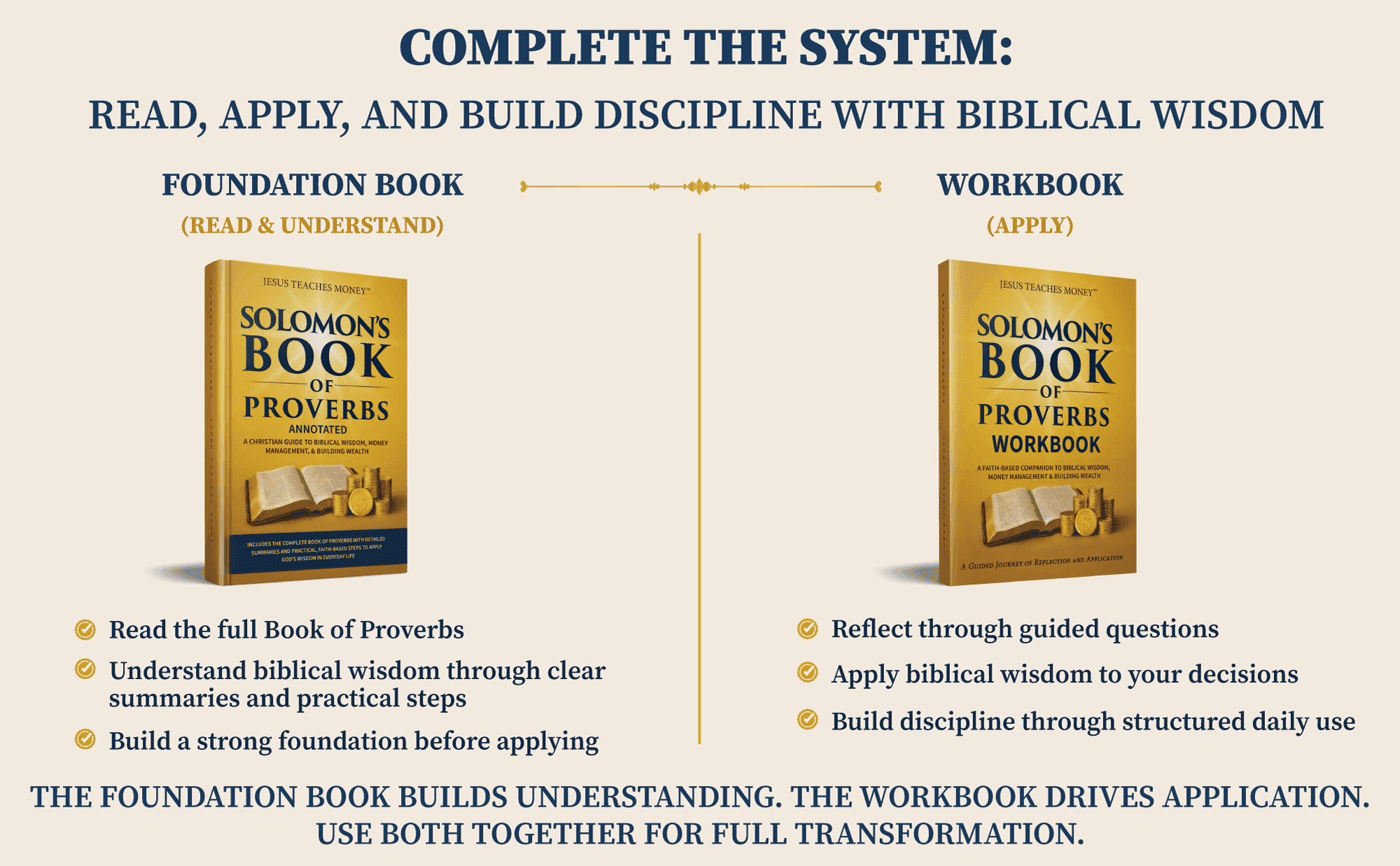
Abraham Duncan is the author of Solomon's Book of Proverbs (Annotated) and the creator of the Jesus Teaches Money™ framework, a structured system designed to help Christians apply biblical wisdom to daily life, stewardship, and financial decision-making.
FAQs
What does Proverbs 3:5–6 mean?
It teaches believers to place genuine confidence in God's wisdom rather than relying primarily on personal understanding, emotional reasoning, or self-direction.
How does trusting God apply to financial decisions?
It calls for disciplined stewardship, wise decision-making, patience, and financial habits shaped by biblical principles rather than fear, impulse, or cultural pressure.
What is the first step I should take?
Identify one area where self-reliance or emotion is controlling your decisions and replace that default with a specific biblical principle applied in a concrete, practical way.